
No products in the cart.
Reading a Bullion Product Page Before You Buy

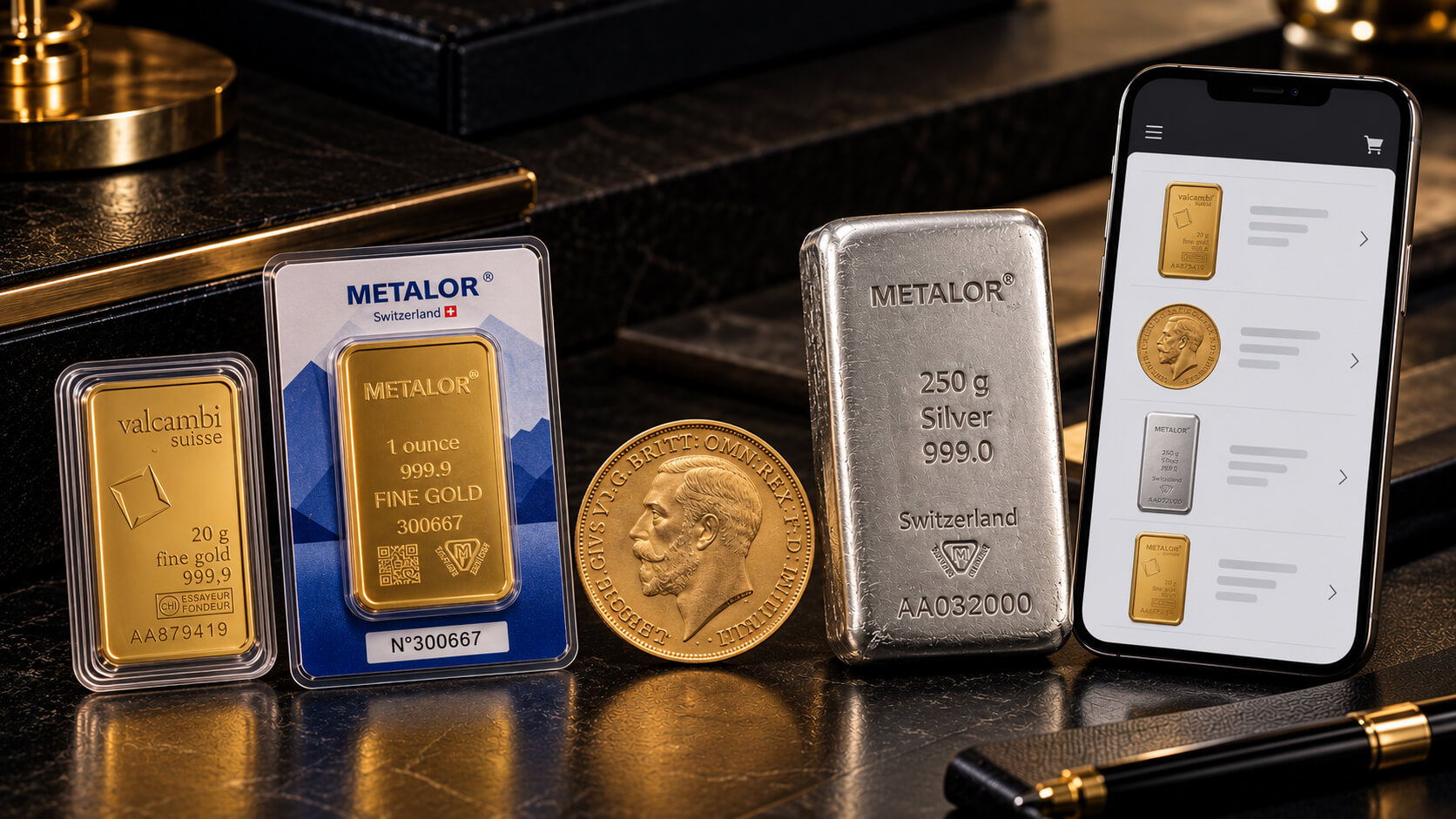
A bullion product page can contain a surprising amount of information.
The product name may identify the metal, weight and refinery. Additional specifications can show fineness, dimensions and physical format. Photographs provide visual reference. Availability indicates whether the product can currently be purchased.
For a buyer, the challenge is not finding information.
It is knowing which information matters most.
Reading bullion product pages in a consistent order can make comparisons clearer and reduce the risk of choosing a product based only on appearance or total price.
Start With the Metal
The first distinction is whether the product contains gold or silver.
This sounds obvious, but gold and silver behave very differently as physical holdings.
Gold concentrates considerable value into relatively little space.
Silver requires substantially more physical weight to represent a similar monetary value.
That affects:
- Purchase size
- Storage
- Handling
- Transport
- Product denominations
A buyer should therefore decide what role the metal itself has before comparing individual products.
Read the Exact Product Name
A good bullion product name communicates several specifications immediately.
Consider:
20 Gram Valcambi Swiss Gold Bar
The name identifies:
- Weight: 20 grams
- Refinery: Valcambi
- Metal: gold
- Format: bar
RM Bullion currently lists the 20 Gram Valcambi Swiss Gold Bar at 999.9 fineness.
The product name is therefore the first summary of what is being purchased.
Check Weight Before Comparing Price
A common comparison error is looking at two total prices without first comparing the amount of metal.
A 2.5 gram gold bar should naturally have a very different total price from a 50 gram gold bar.
RM Bullion’s current Valcambi range includes both 2.5 gram and 50 gram products, each listed at 999.9 fineness but representing very different quantities of gold.
The lower-priced product is not necessarily cheaper on a like-for-like basis.
It simply contains less gold.
Always establish weight first.
Understand the Measurement Unit
Bullion can be denominated in:
- Grams
- Troy ounces
- Kilograms
These units need to be interpreted correctly.
One troy ounce is approximately 31.1035 grams.
One kilogram equals 1,000 grams.
When comparing two products using different units, convert them to the same measurement before drawing conclusions about size or metal quantity.
Check Fineness
Fineness describes precious-metal purity.
Investment gold bars commonly display very high fineness, such as 999.9.
Silver bullion may display a specification such as 999.
A product page should make the stated fineness clear.
Do not confuse weight with purity.
A 50 gram object describes total physical weight. Its fineness explains the proportion represented by the stated precious metal.
Both pieces of information matter.
Identify the Refinery or Mint
The manufacturer is another key part of a bullion product.
RM Bullion’s current selection includes Swiss refiners such as Valcambi and Metalor.
For coins, the relevant identifying institution may instead be a recognized mint.
Manufacturer recognition can make products easier to understand because established bullion producers use defined specifications and recognizable formats.
A buyer should know who produced the product rather than focusing only on the metal.
Distinguish Bars From Coins
Bars and coins can both contain investment gold, but they are different product formats.
A bar is generally identified through refinery, weight, fineness and bullion markings.
A coin may also carry:
- Country
- Monarch or national design
- Year
- Mint identity
- Denomination
- Historical context
RM Bullion currently lists Great Britain Gold Sovereigns George V alongside gold bars from Valcambi and Metalor.
Someone comparing a sovereign with a small gold bar should therefore understand that they are not identical products simply because both contain gold.
Look at Dimensions After Weight
Dimensions tell you how the product occupies physical space.
They are useful for:
- Storage planning
- Understanding scale
- Comparing formats
- Selecting protective storage
However, dimensions should not replace weight as the primary comparison.
Gold is dense.
Two products can appear relatively close in size while representing noticeably different weights.
Photography can also distort visual scale.
The written specifications are more reliable for comparison.
Treat Product Photography as Reference
A premium product image is useful because it helps the buyer recognize:
- Shape
- Markings
- Surface
- Packaging
- General appearance
But product photography should not be used to estimate physical size.
A 5 gram bar may fill an entire image.
A 500 gram bar may also fill an entire image.
Without a common scale, both photographs can appear similar.
Use images for recognition and specifications for measurement.
Check Whether the Product Is Minted or Cast
Some bullion product pages identify the manufacturing format.
Minted bars tend to have highly controlled dimensions and refined surfaces.
Cast bars can have a more traditional appearance with natural variation from the production process.
The distinction primarily affects physical format and presentation.
It should not be confused with purity.
Always read the stated specifications.
Understand What the Price Represents
The displayed retail price is the amount associated with the physical product at that point in the market.
It is influenced by more than raw metal weight.
Physical bullion pricing can reflect:
- Underlying precious-metal value
- Refining
- Manufacturing
- Distribution
- Packaging
- Inventory
- Product demand
- Premium
This is why dividing the international spot price by a product’s weight will not necessarily produce the exact retail amount.
Do Not Compare Premiums Without Comparable Products
A useful price comparison requires similar products.
Compare products with:
- The same metal
- Similar weight
- Similar purity
- Comparable format
- Recognized producers
Comparing a 2.5 gram minted gold bar with a one-kilogram silver bar does not reveal which product has a better premium.
They solve completely different ownership needs.
Availability Is Part of the Decision
A product can fit the buyer’s strategy perfectly but still be unavailable when the purchase is being made.
Physical bullion exists in inventory.
Specific weights and refinery products can sell out.
Availability can therefore influence the final selection.
A buyer might originally prefer one weight but choose a nearby alternative when it better matches current stock.
That does not require abandoning the broader ownership plan.
Understand What “In Stock” Means
When a bullion product is listed as in stock, the buyer can evaluate it as a currently available physical product.
This matters because precious-metal markets move continuously while physical inventory moves through a real supply chain.
Gold may exist as a globally traded commodity while one specific refinery format is temporarily unavailable from a particular seller.
The physical and financial markets are connected, but they are not identical.
Look Beyond the Cheapest Entry Price
A smaller bar can make gold accessible at a lower total purchase amount.
That does not automatically make it the optimal product for every buyer.
Smaller units can provide:
- Lower entry amount
- Greater physical divisibility
- Flexible gifting
- Easier gradual accumulation
Larger units can provide:
- More gold per individual product
- Fewer pieces to organize
- Different premium structures
- Simpler inventory
The product page should be read in relation to the buyer’s objective.
Think About the Number of Physical Pieces
Suppose a buyer wants approximately 100 grams of gold.
Possible structures might include:
- One 100 gram bar
- Two 50 gram bars
- Five 20 gram bars
- Several mixed denominations
The total gold target may be similar.
The physical ownership experience is not.
A product page helps evaluate each individual unit, but the buyer should also think about how several products work together.
Check Storage Implications
The product dimensions and packaging affect storage.
This becomes especially important with silver.
RM Bullion currently lists a 250 Gram Metalor Swiss Silver Bar at 999 fineness, illustrating how silver ownership often moves into heavier physical formats than small gold bars.
A buyer accumulating several silver bars should consider the combined physical weight rather than evaluating each bar in isolation.
Read Descriptions Critically
Product descriptions can provide useful context about:
- Refinery
- Metal
- Purity
- Product use
- Physical characteristics
But the structured specifications are usually the best place to verify exact measurements.
Marketing language can explain why a product may appeal to buyers.
Specifications explain what the product physically is.
Both have a role.
They should not be confused.
Understand What Is Not Guaranteed
A product page shows the current product and current transaction conditions.
It does not guarantee:
- Future gold prices
- Future silver prices
- Future resale value
- Future product availability
- A particular investment return
Precious metals move with markets.
A buyer should distinguish current product facts from predictions about future value.
Compare Products With a Consistent Checklist
Before purchasing, review the same categories every time:
- Metal: Gold or silver
- Weight: Grams, troy ounces or kilograms
- Fineness: Precious-metal purity
- Producer: Refinery or mint
- Format: Bar or coin
- Dimensions: Physical scale
- Packaging: Where relevant
- Availability: Current stock status
- Price: Current retail amount
- Purpose: How the product fits the ownership plan
This prevents one attractive characteristic from dominating the decision.
Product Pages Become Easier With Experience
At first, bullion terminology can feel technical.
After comparing several products, the structure becomes repetitive in a useful way.
Metal.
Weight.
Purity.
Refinery.
Format.
Price.
These are the core characteristics buyers will encounter repeatedly.
Once that framework is familiar, product pages become much faster to evaluate.
A Better Comparison Starts With the Product
Physical bullion does not need to be complicated.
The key is to avoid beginning with the wrong question.
Instead of asking only, “Which one is cheaper?” start by asking, “What exactly is this product?”
Identify the metal.
Read the weight.
Check the purity.
Recognize the refinery.
Understand the format.
Then consider price, storage and flexibility.
That sequence turns a product page from a collection of numbers into a useful buying tool.
Frequently Asked Questions
What should I check first on a bullion product page?
Start with the metal, weight, purity and refinery or mint so you understand exactly what physical product is being offered.
Why should I not compare bullion using total price alone?
Different products contain different amounts of precious metal, so a lower total price may simply reflect a smaller weight.
What does 999.9 mean on a gold product page?
It describes fineness and indicates highly refined investment-grade gold.
Are product photos accurate for comparing bullion size?
Photos help identify products, but written dimensions and weight are more reliable because images may use different scales.
Why does product availability matter?
Bullion is a physical product, so specific weights and refinery formats depend on actual inventory.
Compare Bullion With Greater Clarity
Explore gold bars, gold coins, and silver bars by weight, purity, refinery, and physical format.
Related Articles
Choosing Bullion Weights for Your Buying Plan
Once a buyer decides to own physical bullion, another decision quickly follows: what weight should they...
Read More
Gold Coins Carry Heritage, Value, and Lasting Appeal
Gold coins hold a special place in the world of precious metals. They are not only...
Read More
Why Clear Product Availability Matters When Buying Bullion Online
Buying bullion online should feel clear from the first click. When someone is looking for gold...
Read More