
No products in the cart.
Assay Cards, Serial Numbers, and Bullion Identification

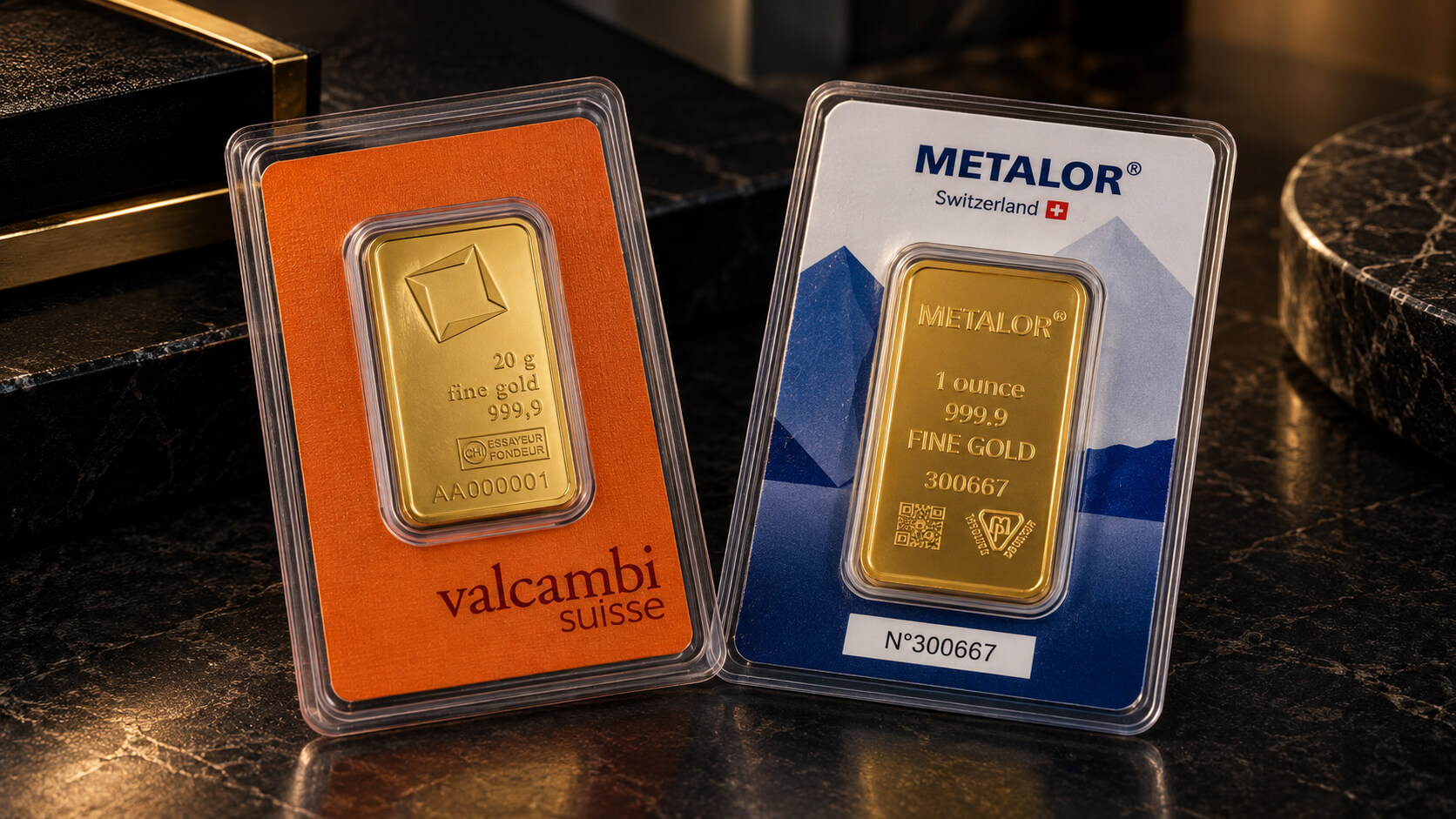
Buying physical gold means buying a product that can be physically identified.
Unlike an investment represented only by a number on a screen, a gold bar carries information directly on the product and, depending on its format, on the packaging around it. Weight, fineness, refinery identity, serial information and assay details can all help describe exactly what the owner holds.
Understanding these details makes it easier to evaluate bullion before buying, organize a collection after purchase and recognize the characteristics of an individual product later.
An assay card, however, should not be misunderstood as a decorative certificate that creates the value of the gold. The underlying precious metal remains the central asset. The purpose of the surrounding information is to help establish a clear product identity.
What Is an Assay?
In precious metals, assaying refers to evaluating the composition and purity of a metal.
Investment gold is refined to very high levels of purity. A bullion product may therefore display a fineness such as 999.9, communicating the proportion of fine gold within the product.
For buyers, the important point is that purity is a measurable specification rather than a visual impression.
A bar does not contain higher-quality gold simply because it looks more polished or arrives in more elaborate packaging. The relevant specifications need to be read and understood.
What Is an Assay Card?
Many smaller minted bullion bars are supplied inside protective packaging that incorporates product information.
This is commonly described as an assay card or assay packaging.
Depending on the refinery and product, the packaging may communicate information such as:
- Refinery or manufacturer
- Metal
- Weight
- Fineness
- Product identification
- Serial number where applicable
- Certification or assayer information
The exact format differs between products and manufacturers.
The purpose is to keep important information associated with the physical bar while also helping protect its surface from unnecessary handling.
The Bar Still Matters More Than the Card
An assay card should never be treated as the precious-metal asset itself.
The gold is the asset.
Packaging helps identify and protect it.
This distinction matters because packaging alone should not be considered sufficient proof that a product is genuine. Professional bullion evaluation considers the complete product, its physical characteristics and the identifying information associated with it.
A convincing piece of packaging cannot transform an incorrect product into genuine investment bullion.
Buyers should therefore focus on the complete combination of:
- Recognized refinery
- Correct weight
- Stated fineness
- Appropriate markings
- Product format
- Reliable purchase source
Refinery Markings Establish Product Identity
A recognized gold bar normally communicates who produced it.
RM Bullion carries investment-grade products from established Swiss refiners including Valcambi and Metalor. The current range includes formats such as the 20 Gram Valcambi Swiss Gold Bar and 1 oz Metalor Swiss Gold Bar.
The refinery name is useful because it connects the physical bar to a known producer and product specification.
A buyer examining a bar should be able to identify its manufacturer without relying entirely on the seller’s description.
Weight Should Be Clearly Defined
Physical bullion is sold according to defined weights.
Gold products can be available in formats such as:
- 2.5 grams
- 5 grams
- 10 grams
- 20 grams
- 50 grams
- 100 grams
- 1 troy ounce
- Larger investment formats
The stated weight tells the buyer how much physical product is represented by that individual bar.
For example, RM Bullion’s 20 Gram Valcambi Swiss Gold Bar is listed at 20 grams with 999.9 fineness.
Weight should be read together with purity rather than considered alone.
Fineness Explains Purity
Gold bullion frequently displays a number such as 999.9.
This describes fineness.
A 999.9 gold bar is refined to 999.9 parts per thousand gold, commonly associated with investment-grade 24-carat bullion.
Fineness is one of the most important specifications to identify because two objects with the same physical weight do not necessarily contain the same quantity of fine gold if their purities differ.
This is why a buyer should avoid judging gold solely by size or appearance.
Serial Numbers Can Add Individual Identification
Some bullion products include serial numbers.
A serial number provides an individual identifying reference associated with a particular bar or package.
This can be useful for organization, documentation and product tracking.
For an owner building a larger bullion holding, recording available serial information can make inventory management clearer.
A simple ownership record might contain:
- Product name
- Refinery
- Weight
- Fineness
- Quantity
- Serial number where applicable
- Purchase date
- Purchase record reference
This becomes more useful as the number of physical products increases.
Not Every Product Uses the Same Identification System
Buyers should not assume every gold bar has identical markings or packaging.
Different refiners use different product designs.
Different weights from the same refinery may also use different physical formats.
A small minted bar can be packaged differently from a larger bar. A coin follows a different identification structure again.
The absence of one feature that appears on another product does not automatically indicate a problem.
The correct comparison is against the specification of that exact product.
Protective Packaging Has a Practical Purpose
Small minted gold bars have refined surfaces that can be marked by repeated handling.
Protective packaging can reduce unnecessary contact.
It can also keep the product and its associated information together.
This is particularly convenient for owners who hold several small bars and want each individual unit to remain easy to identify.
Protective packaging can therefore support:
- Surface protection
- Organization
- Product identification
- Easier inventory management
- Reduced unnecessary handling
These are practical benefits rather than sources of additional gold content.
Avoid Opening Packaging Without a Reason
Owners sometimes want to remove a gold bar from its packaging simply to handle the metal directly.
That may not provide any meaningful advantage.
Once protective packaging is opened, the surface can become more exposed to fingerprints, scratches and environmental contact.
The gold itself does not disappear if packaging is damaged, but keeping an intact product in its original presentation can make ownership simpler.
If there is no reason to remove the bar, leaving it protected is often the more practical approach.
Packaging Should Not Replace Secure Storage
An assay card protects presentation.
It does not provide meaningful security against theft or loss.
A packaged gold bar remains a compact, valuable physical object.
Owners still need to think about secure storage independently.
A plastic package should never create a false sense that the bullion is fully protected simply because the surface is enclosed.
Physical security, access control and discretion remain separate considerations.
Record the Product Before Storing It
When receiving physical bullion, it can be useful to document the product before placing it into long-term storage.
The process does not need to be complicated.
Record:
- Product type
- Metal
- Weight
- Refinery
- Fineness
- Serial information if present
- Quantity
- Purchase documentation
This creates a clear personal inventory.
For several identical bars, recording quantity alongside identifying information can prevent confusion later.
Photography Can Support Personal Records
Some owners also keep photographs of their bullion for inventory purposes.
If this is done, images should be stored securely and privately.
Photographs can capture:
- Product face
- Packaging
- Refinery markings
- Serial information
- General condition
However, owners should avoid publicly sharing detailed images containing sensitive identifying information.
Bullion ownership benefits from discretion.
Documentation is useful when it improves organization without unnecessarily advertising what is owned or where it is stored.
Identification Matters When Bullion Changes Hands
A bullion product may eventually be:
- Sold
- Gifted
- Transferred
- Inherited
- Reorganized within a collection
Clear identification helps at each stage.
Someone receiving a gold bar should be able to understand what it is.
A well-maintained product with visible weight, fineness and refinery information is easier to describe than an unidentified piece of metal.
This is one reason standardized bullion formats remain practical.
Coins Use a Different Identification Language
Gold coins do not necessarily use assay cards in the same way as small minted bars.
Instead, their identity can be established through characteristics such as:
- Mint
- Country
- Design
- Year
- Weight
- Gold content
- Dimensions
Recognized coins such as sovereigns therefore need to be understood according to their own product specifications rather than evaluated using the expectations of a packaged gold bar.
Bars and coins can both represent physical gold, but their identification systems differ.
Counterfeit Concerns Require More Than Visual Inspection
A product can look convincing and still require professional evaluation.
For that reason, buyers should avoid assuming that a serial number, polished surface or professional-looking package automatically proves authenticity.
Reliable sourcing is one of the strongest protections available to a bullion buyer.
RM Bullion states that its range is sourced from internationally accredited Swiss refineries and focuses on certified physical gold and silver.
Buying through an established bullion channel reduces the need to make authenticity judgments based only on photographs or packaging.
Compare the Product With Its Specification
When reviewing bullion, compare what you physically receive with what the product is supposed to be.
Check:
- Correct refinery
- Correct metal
- Correct stated weight
- Correct fineness
- Appropriate product format
- Expected packaging
- Identifying information where applicable
The goal is not to become a professional bullion assayer at home.
It is to understand enough about the product to know what you own.
Why This Matters for Long-Term Ownership
Physical bullion can remain in storage for years.
Over time, the original purchase details may become less familiar.
A buyer who clearly records product information from the beginning will have an easier time understanding the holding later.
This is especially relevant when a collection grows gradually.
Five years of purchases can produce several weights, refineries and formats.
Good identification keeps that collection understandable.
Keep the Focus on the Metal
Assay packaging, serial numbers and refinery markings all have practical roles.
None should distract from the fundamental structure of bullion.
A physical gold bar represents a defined amount of precious metal produced to a stated fineness.
Everything around that central fact helps communicate, protect and organize the product.
The most useful approach is therefore balanced.
Understand the packaging.
Read the markings.
Record the identifying information.
Protect the product.
But remember that the underlying precious metal remains the reason the bullion exists.
Frequently Asked Questions
What is an assay card on a gold bar?
An assay card is protective packaging that can display information about the bullion product, such as refinery, weight, fineness and identifying details.
Does every gold bar have a serial number?
No. Identification formats vary by refinery, product and weight, so buyers should review the specifications of the exact product.
Should I remove a gold bar from its assay packaging?
There is usually no need to remove a protected minted bar unless there is a specific reason to do so.
Does assay packaging prove that a gold bar is authentic?
Packaging is one part of product identification, but authenticity should not be judged from packaging alone.
What information should I record about my bullion?
Useful records can include product name, metal, weight, fineness, refinery, quantity, serial information where applicable and purchase details.
Choose Bullion With Clear Identification
Explore physical gold and silver from recognized Swiss refineries with clearly defined weights, purity, and product specifications.
Related Articles
Building a Precious Metals Collection Takes Planning, Not Guesswork
Building a precious metals collection is not only about buying one product and stopping there. For...
Read More
Gold and Silver Bars Make Physical Value Easy to Understand
Gold and silver bars are among the clearest ways to understand physical precious metals. They are...
Read More
Choosing Bullion Weights for Your Buying Plan
Once a buyer decides to own physical bullion, another decision quickly follows: what weight should they...
Read More